Showing posts with label Record. Show all posts
 on Pinterest Record Player, Turntable and Vintage Record Playershttps://s-media-cache-ak0.pinimg.com/236x/be/a3/f6/bea3f6a1f6f6433f5b98df38ff9f0f8f.jpg
Linn Products antique phonograph
The phonograph is a tool created in 1877 for the mechanised duplication and tracking of audio. In its later forms additionally it is called a gramophone (as a trademark since 1887, as a generic name since c. 1900). The audio vibration waveforms are registered as equivalent physical deviations of any spiral groove etched, etched, incised, or impressed into the surface of an spinning disk or cylinder, called a "record". To recreate the sound, the surface is likewise rotated while a playback stylus traces the groove and is also therefore vibrated because of it, very faintly reproducing the noted sound. In early acoustic phonographs, the stylus vibrated a diaphragm which produced sound waves that have been coupled to the open air via a flaring horn, or directly to the listener's ears through stethoscope-type earphones. In later electric phonographs (also called record players (since 1940s) or, lately, turntables), the motions of the stylus are changed into an analogous electric signal with a transducer, then changed back into sound by a loudspeaker.
The phonograph was developed in 1877 by Thomas Edison. While other inventors acquired produced devices that can record sounds, Edison's phonograph was the first ever to be able to reproduce the documented audio. His phonograph at first recorded audio onto a tinfoil sheet covered around a rotating cylinder. A stylus responding to sound vibrations produced an up and down or hill-and-dale groove in the foil. Alexander Graham Bell's Volta Laboratory made several improvements in the 1880s, like the use of wax-coated cardboard cylinders, and a cutting stylus that moved laterally in a "zig zag" groove across the record.
Within the 1890s, Emile Berliner initiated the move from phonograph cylinders to toned discs with a spiral groove working from the periphery to near the center. Later improvements through the years included improvements to the turntable and its drive system, the stylus or needle, and the audio and equalization systems.
The disk phonograph record was the dominant audio taking format throughout the majority of the 20th hundred years. From your mid-1980s on, phonograph use on a standard record player declined as a result of rise of the cassette tape sharply, compact disc and other digital recording formats. Details are a well liked format for a few audiophiles and DJs still. Vinyl records are still employed by some DJs and musicians in their concert performances. Musicians continue steadily to release their recordings on vinyl records. The initial recordings of music artists are re-issued on vinyl fabric sometimes.
Usage of terminology is not standard across the English-speaking world (see below). In more modern usage, the playback device is often called a "turntable", "record player", or "record changer". When used in conjunction with a mixing machine as part of a DJ set up, turntables are often called "decks".
The term phonograph ("sound writing") was produced from the Greek words ???? (phon?, "sound" or "voice") and ????? (graph?, "writing"). The similar related conditions gramophone (from the Greek ?????? gramma "letter" and ???? ph?n? "words") and graphophone have similar main meanings. The root base were already familiar from existing 19th-century words such as picture ("light writing"), telegraph ("distant writing"), and mobile phone ("distant sound"). The brand new term might have been inspired by the prevailing words phonographic and phonography, which referred to a system of phonetic shorthand; in 1852 THE BRAND NEW York Times carried an advertisements for "Professor Webster's phonographic class", and in 1859 the brand new York State Professors Connection tabled a motion to "employ a phonographic recorder" to track record its meetings.
Arguably, any device used to track record audio or reproduce registered audio could be called a kind of "phonograph", but in common practice the indicated term has come to indicate historical technologies of audio recording, relating audio-frequency modulations of any physical trace or groove.
In the late 19th and early 20th generations, "Phonograph", "Gramophone", "Graphophone", "Zonophone" and the like were still brand names specific to various manufacturers of sometimes completely different (i.e. cylinder and disk) machines; so extensive use was manufactured from the general term "talking machine", especially in print. "Talking machine" had earlier been used to refer to complicated devices which produced a crude imitation of speech, by simulating the workings of the vocal cords, tongue, and lips - a potential source of confusion both then and now.
In British British, "gramophone" may make reference to any sound-reproducing machine using disk records, that have been popularized and presented in the united kingdom by the Gramophone Company. Originally, "gramophone" was a proprietary trademark of that company and any use of the name by competing makers of disc records was vigorously prosecuted in the courts, but in 1910 an English court decision decreed that it had become a generic term; it has been so used in the united kingdom & most Commonwealth countries since. The word "phonograph" was usually restricted to machines which used cylinder records.
"Gramophone" generally described a wind-up machine. After the advantages of the softer vinyl fabric information, 33 1/3-rpm LPs (long-playing documents) and 45-rpm "single" or two-song information, and EPs (extended-play recordings), the common name became "record player" or "turntable". Often the home record player was part of a system that included a radio (radiogram) and, later, might play audiotape cassettes also. From about 1960, such a system began to certainly be a "hi-fi" (high-fidelity, monophonic) or a "stereo" (most systems being stereophonic by the mid-1960s).
In Australian British, "record player" was the term; "turntable" was a far more technical term; "gramophone" was limited to the old mechanised (i.e., wind-up) players; and "phonograph" was used as in British English.
Gaudi. The Alan Parsons project 1989a. 0lk 70341163 Osta.ee
 https://cache.osta.ee/iv2/auctions/1_4_28072799.jpg
OIP.Mf29aa89c5ff63ecb2b10e20f1908ad9co0
5A33BB56668AF82F5B711E0FFDCCBC68DBE5670A7https://www.pinterest.com/markash1969/the-record-player/
Embed Our image to your website
ThumbnailImageEmbed Our image to a Forum
ThumbnailImage
on Pinterest Record Player, Turntable and Vintage Record Players
 Victrola Antique Phonograph Record Player Harp Gallery Antiquehttp://www.harpgallery.com/extimg/r3/1024__1024____sz__vic194rec.JPG
Akai (recording) antique phonograph
The phonograph is a device developed in 1877 for the mechanised taking and duplication of audio. In its later forms additionally it is called a gramophone (as a trademark since 1887, as a generic name since c. 1900). The audio vibration waveforms are registered as matching physical deviations of a spiral groove engraved, etched, incised, or impressed into the surface of an rotating disc or cylinder, called a "record". To recreate the audio, the top is in the same way rotated while a playback stylus traces the groove and it is therefore vibrated by it, very faintly reproducing the recorded sound. In early acoustic phonographs, the stylus vibrated a diaphragm which produced sound waves which were coupled to the open air by having a flaring horn, or right to the listener's ears through stethoscope-type earphones. In later electric phonographs (also known as record players (since 1940s) or, most recently, turntables), the movements of the stylus are converted into an analogous electrical signal by the transducer, then modified back to sound with a loudspeaker.
The phonograph was invented in 1877 by Thomas Edison. While other inventors experienced produced devices that can record tones, Edison's phonograph was the first to be able to reproduce the recorded sound. His phonograph at first recorded audio onto a tinfoil sheet wrapped around a rotating cylinder. A stylus responding to sound vibrations produced an along or hill-and-dale groove in the foil. Alexander Graham Bell's Volta Laboratory made several improvements in the 1880s, including the use of wax-coated cardboard cylinders, and a cutting stylus that moved from side to side in a "zig zag" groove across the record.
Inside the 1890s, Emile Berliner initiated the transition from phonograph cylinders to toned discs with a spiral groove jogging from the periphery to close to the center. Later advancements through the years included alterations to the turntable and its own drive system, the stylus or needle, and the equalization and sound systems.
The disc phonograph record was the prominent audio tracking format throughout most of the 20th hundred years. From your mid-1980s on, phonograph use on a standard record player declined sharply as a result of rise of the cassette tape, compact disc and other digital tracking formats. Information are a favorite format for a few audiophiles and DJs still. Vinyl records are being used by some DJs and musicians in their concert performances still. Musicians continue steadily to release their recordings on vinyl records. The original recordings of musicians are re-issued on vinyl fabric sometimes.
Using terminology is not standard across the English-speaking world (see below). In newer usage, the playback device is categorised as a "turntable", "record player", or "record changer". When used in conjunction with a mixing machine as part of a DJ set up, turntables tend to be called "decks".
The term phonograph ("sound writing") was derived from the Greek words ???? (phon?, "sound" or "voice") and ????? (graph?, "writing"). The similar related conditions gramophone (from the Greek ?????? gramma "letter" and ???? ph?n? "words") and graphophone have similar root meanings. The root base were already familiar from existing 19th-century words such as picture ("light writing"), telegraph ("distant writing"), and phone ("distant sound"). The new term might have been influenced by the existing words phonographic and phonography, which referred to something of phonetic shorthand; in 1852 THE BRAND NEW York Times transported an ad for "Professor Webster's phonographic class", and in 1859 the brand new York State Professors Relationship tabled a motion to "employ a phonographic recorder" to record its meetings.
Arguably, any device used to track record audio or reproduce documented sound could be called a type of "phonograph", but in common practice the indicated phrase has come to signify historical solutions of sound saving, involving audio-frequency modulations of your physical groove or trace.
In the past due 19th and early 20th hundreds of years, "Phonograph", "Gramophone", "Graphophone", "Zonophone" and so on were still brands specific to various creators of sometimes completely different (i.e. cylinder and disk) machines; so sizeable use was manufactured from the common term "talking machine", in print especially. "Talking machine" had earlier been used to refer to complicated devices which produced a crude imitation of speech, by simulating the workings of the vocal cords, tongue, and lips - a potential source of misunderstandings both and today then.
In British British, "gramophone" may refer to any sound-reproducing machine using disc records, which were popularized and released in the united kingdom by the Gramophone Company. Originally, "gramophone" was a proprietary trademark of that company and any use of the name by competing makers of disc records was vigorously prosecuted in the courts, however in 1910 an English court decision decreed so it had turn into a generic term; it's been so used in the united kingdom & most Commonwealth countries since. The word "phonograph" was usually limited to machines which used cylinder records.
"Gramophone" generally described a wind-up machine. After the launch of the softer vinyl data, 33 1/3-rpm LPs (long-playing documents) and 45-rpm "single" or two-song data, and EPs (extended-play recordings), the normal name became "record player" or "turntable". Often the home record player was part of something that included a radio (radiogram) and, later, might also play audiotape cassettes. From about 1960, such a system began to certainly be a "hi-fi" (high-fidelity, monophonic) or a "stereo" (most systems being stereophonic by the mid-1960s).
In Australian English, "record player" was the term; "turntable" was a more complex term; "gramophone" was restricted to the old mechanised (i.e., wind-up) players; and "phonograph" was used just as British English.
Horn or Gramophone w Horn Record Player Phonograph 78RPM Antique Style
 http://thekingsbay.com/image/cache/catalog/Products/Home%20Decor/round%20gramophone%20a1-700x1000.jpg
Very interesting speaker system for the original Akai M8 pro tape
 http://i.ebayimg.com/00/s/ODE0WDE2MDA=/z/t~sAAOSwuwRYLgVI/$_1.JPG?set_id=8800005007
Vintage Akai 1710 W Reel to Reel Tape Recorder by MemoryVintage
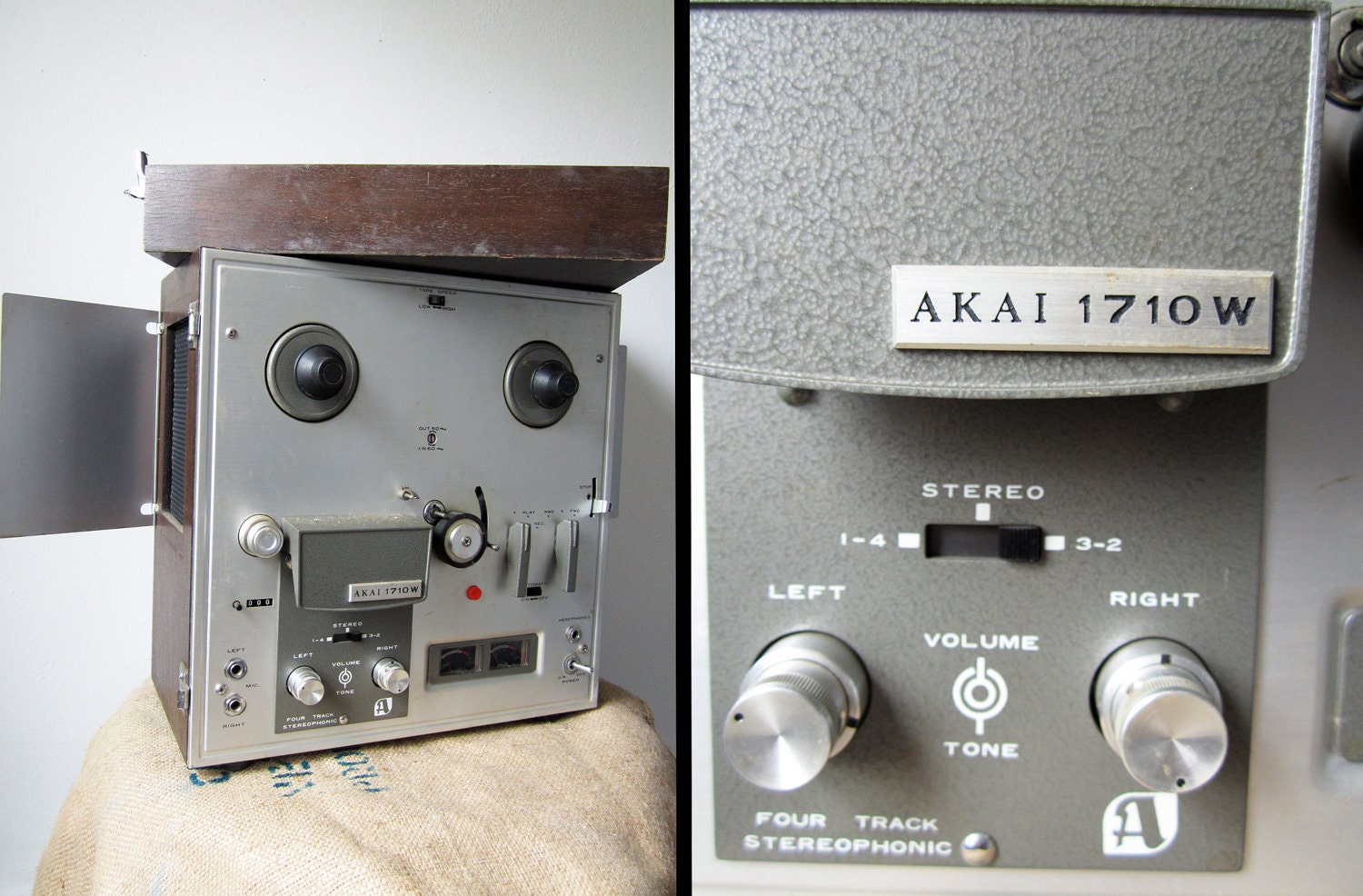 https://img0.etsystatic.com/000/0/6271970/il_fullxfull.336804178.jpg
Antique 1915 Phonograph Wind Up Record Player Harp Gallery Antique
 https://www.harpgallery.com/ebay/er/phono1719s1.jpg
OIP.M6a4ead0db846160ca38e790164c1440eo0
944941E3D4C2F4B4DD39E81F2B421770EE9BA5038https://www.harpgallery.com/showroom/item8615.html
Embed Our image to your website
ThumbnailImageEmbed Our image to a Forum
ThumbnailImage
Victrola Antique Phonograph Record Player Harp Gallery Antique
 Phonographs on Pinterest Gramophone Record, Columbia and Antiqueshttps://s-media-cache-ak0.pinimg.com/236x/f1/02/6c/f1026c7b60cd346b7f01ff6dfefb588c.jpg
Michell antique phonograph
The phonograph is a device developed in 1877 for the mechanised saving and reproduction of sound. In its later forms it is also called a gramophone (as a trademark since 1887, as a generic name since c. 1900). The audio vibration waveforms are registered as corresponding physical deviations of a spiral groove imprinted, etched, incised, or impressed into the surface of your rotating disk or cylinder, called a "record". To recreate the audio, the surface is similarly rotated while a playback stylus traces the groove which is therefore vibrated because of it, very faintly reproducing the noted sound. In early acoustic phonographs, the stylus vibrated a diaphragm which produced sound waves that have been coupled to the open air via a flaring horn, or right to the listener's ears through stethoscope-type earphones. In later electric phonographs (also called record players (since 1940s) or, most recently, turntables), the motions of the stylus are converted into an analogous electric powered signal by way of a transducer, then modified back into audio with a loudspeaker.
The phonograph was developed in 1877 by Thomas Edison. While other inventors acquired produced devices which could record does sound, Edison's phonograph was the first ever to have the ability to reproduce the registered sound. His phonograph at first recorded sound onto a tinfoil sheet covered around a spinning cylinder. A stylus responding to sound vibrations produced an and down or hill-and-dale groove in the foil up. Alexander Graham Bell's Volta Laboratory made several improvements in the 1880s, including the use of wax-coated cardboard cylinders, and a cutting stylus that moved from side to side in a "zig zag" groove round the record.
In the 1890s, Emile Berliner initiated the move from phonograph cylinders to smooth discs with a spiral groove jogging from the periphery to near to the center. Later advancements over time included adjustments to the turntable and its drive system, the stylus or needle, and the equalization and sound systems.
The disk phonograph record was the dominating audio tracking format throughout almost all of the 20th hundred years. From mid-1980s on, phonograph use on a standard record player declined sharply because of the rise of the cassette tape, compact disk and other digital recording formats. Information are a favorite format for a few audiophiles and DJs still. Vinyl records are being used by some DJs and musicians in their concert performances still. Musicians continue to release their recordings on vinyl records. The initial recordings of musicians are re-issued on vinyl fabric sometimes.
Using terminology is not uniform over the English-speaking world (see below). In more modern usage, the playback device is named a "turntable", "record player", or "record changer". When found in conjunction with a mixer within a DJ setup, turntables are often called "decks".
The word phonograph ("sound writing") was derived from the Greek words ???? (phon?, "sound" or "voice") and ????? (graph?, "writing"). The similar related conditions gramophone (from the Greek ?????? gramma "letter" and ???? ph?n? "tone") and graphophone have similar main meanings. The roots were already familiar from existing 19th-century words such as picture ("light writing"), telegraph ("distant writing"), and mobile phone ("distant sound"). The brand new term may have been affected by the existing words phonographic and phonography, which referred to a system of phonetic shorthand; in 1852 THE BRAND NEW York Times carried an advert for "Professor Webster's phonographic class", and in 1859 the brand new York State Educators Association tabled a movement to "employ a phonographic recorder" to track record its meetings.
Arguably, any device used to track record audio or reproduce recorded audio could be called a kind of "phonograph", however in common practice the portrayed phrase has come to suggest traditional systems of sound recording, relating audio-frequency modulations of your physical track or groove.
In the overdue 19th and early 20th hundreds of years, "Phonograph", "Gramophone", "Graphophone", "Zonophone" and the like were still brand names specific to various manufacturers of sometimes completely different (i.e. cylinder and disc) machines; so sizeable use was made of the generic term "talking machine", in print especially. "Talking machine" had earlier been used to refer to complicated devices which produced a crude imitation of speech, by simulating the workings of the vocal cords, tongue, and lips - a potential source of confusion both then and today.
In British English, "gramophone" may refer to any sound-reproducing machine using disk records, that have been popularized and launched in the united kingdom by the Gramophone Company. Originally, "gramophone" was a proprietary trademark of that company and any use of the name by competing makers of disc records was vigorously prosecuted in the courts, but in 1910 an English court decision decreed which it had become a generic term; it has been so used in the UK and most Commonwealth countries since. The term "phonograph" was usually limited to machines which used cylinder records.
"Gramophone" generally referred to a wind-up machine. After the intro of the softer vinyl fabric documents, 33 1/3-rpm LPs (long-playing information) and 45-rpm "single" or two-song details, and EPs (extended-play recordings), the common name became "record player" or "turntable". Usually the home record player was part of something that included a radio (radiogram) and, later, might also play audiotape cassettes. From about 1960, such something began to be described as a "hi-fi" (high-fidelity, monophonic) or a "stereo" (most systems being stereophonic by the mid-1960s).
In Australian English, "record player" was the word; "turntable" was a more technological term; "gramophone" was limited to the old mechanised (i.e., wind-up) players; and "phonograph" was used just as British English.
Antique Phonographs, Photos Gramophones, Victrolas, Photos
 http://www.razzarsharp.com/Phonographs/GuestPhotos/PhonosNov2013/daveS2.JPG
Antique Phonographs, Photos Gramophones, Victrolas, Photos
 http://www.razzarsharp.com/Phonographs/GuestPhotos/PhonosNov2013/BradH1.jpg
193039;s radio phonograph console ballyhoo research Pinterest
 http://media-cache-ec0.pinimg.com/736x/2e/6d/b2/2e6db2911898395d457e0a43c6678904.jpg
Phonograph lamps! New Uses Pinterest
 http://media-cache-ec0.pinimg.com/736x/b5/8d/65/b58d6519b5cac3e4468b546ffaff4c49.jpg
OIP.M52c814d50978ce5128dac3a0ad1eb46eo0
906CB9536EDAB4BAE26F54E0C271F0EC2DA69E4FEhttps://www.pinterest.com/youcancallmemom/phonographs/
Embed Our image to your website
ThumbnailImageEmbed Our image to a Forum
ThumbnailImage
Phonographs on Pinterest Gramophone Record, Columbia and Antiques
 Vintage Turntables Record Player Phonograph DJ Turntableshttp://www.soundsclassic.com/listpix/luxmanp406.jpg
Luxman antique phonograph
The phonograph is a tool invented in 1877 for the mechanised reproduction and saving of audio. In its later forms additionally it is called a gramophone (as a trademark since 1887, as a generic name since c. 1900). The sound vibration waveforms are recorded as related physical deviations of any spiral groove engraved, etched, incised, or impressed into the surface of an spinning disk or cylinder, called a "record". To recreate the audio, the top is in the same way rotated while a playback stylus traces the groove and it is therefore vibrated by it, very reproducing the registered audio faintly. In early acoustic phonographs, the stylus vibrated a diaphragm which produced sound waves that have been coupled to the open air via a flaring horn, or directly to the listener's ears through stethoscope-type earphones. In later electric phonographs (also known as record players (since 1940s) or, lately, turntables), the motions of the stylus are converted into an analogous electronic signal by way of a transducer, turned back into audio by the loudspeaker then.
The phonograph was invented in 1877 by Thomas Edison. While other inventors had produced devices that could record may seem, Edison's phonograph was the first to be able to reproduce the recorded sound. His phonograph at first recorded audio onto a tinfoil sheet twisted around a revolving cylinder. A stylus responding to acoustics vibrations produced an along or hill-and-dale groove in the foil. Alexander Graham Bell's Volta Laboratory made several improvements in the 1880s, including the use of wax-coated cardboard cylinders, and a cutting stylus that moved from side to side in a "zig zag" groove round the record.
Inside the 1890s, Emile Berliner initiated the transition from phonograph cylinders to even discs with a spiral groove jogging from the periphery to close to the center. Later advancements through the years included changes to the turntable and its own drive system, the needle or stylus, and the equalization and sound systems.
The disk phonograph record was the dominant audio tracking format throughout almost all of the 20th century. Through the mid-1980s on, phonograph use on a standard record player declined because of the rise of the cassette tape sharply, compact disk and other digital recording formats. Details are a favorite format for a few audiophiles and DJs still. Vinyl records are still used by some DJs and musicians in their concert performances. Musicians continue to release their recordings on vinyl records. The original recordings of musicians are re-issued on vinyl sometimes.
Usage of terminology is not consistent over the English-speaking world (see below). In more modern usage, the playback device is often called a "turntable", "record player", or "record changer". When found in conjunction with a mixer as part of a DJ setup, turntables tend to be called "decks".
The term phonograph ("sound writing") was derived from the Greek words ???? (phon?, "sound" or "voice") and ????? (graph?, "writing"). The similar related terms gramophone (from the Greek ?????? gramma "notice" and ???? ph?n? "tone of voice") and graphophone have similar main meanings. The origins were already familiar from existing 19th-century words such as photograph ("light writing"), telegraph ("distant writing"), and phone ("distant sound"). The new term may have been affected by the prevailing words phonographic and phonography, which described something of phonetic shorthand; in 1852 THE BRAND NEW York Times taken an advertising campaign for "Professor Webster's phonographic class", and in 1859 the New York State Instructors Association tabled a action to "hire a phonographic recorder" to record its meetings.
Arguably, any device used to track record audio or reproduce registered audio could be called a type of "phonograph", but in common practice the portrayed phrase has come to indicate historical solutions of sound saving, including audio-frequency modulations of the physical trace or groove.
In the past due 19th and early 20th hundreds of years, "Phonograph", "Gramophone", "Graphophone", "Zonophone" and the like were still brands specific to various designers of sometimes completely different (i.e. cylinder and disc) machines; so appreciable use was made of the generic term "talking machine", in print especially. "Talking machine" had earlier been used to make reference to complicated devices which produced a crude imitation of speech, by simulating the workings of the vocal cords, tongue, and lips - a potential source of confusion both then and today.
In British British, "gramophone" may make reference to any sound-reproducing machine using disk records, which were popularized and released in the UK by the Gramophone Company. Originally, "gramophone" was a proprietary trademark of that company and any use of the name by competing makers of disc records was vigorously prosecuted in the courts, but in 1910 an English court decision decreed so it had become a generic term; it has been so used in the united kingdom & most Commonwealth countries since. The term "phonograph" was usually limited to machines which used cylinder records.
"Gramophone" generally described a wind-up machine. Following the benefits of the softer vinyl fabric files, 33 1/3-rpm LPs (long-playing details) and 45-rpm "single" or two-song files, and EPs (extended-play recordings), the normal name became "record player" or "turntable". Often the home record player was part of something that included a radio (radiogram) and, later, may also play audiotape cassettes. From about 1960, such something began to be described as a "hi-fi" (high-fidelity, monophonic) or a "stereo" (most systems being stereophonic by the mid-1960s).
In Australian British, "record player" was the term; "turntable" was a more complex term; "gramophone" was restricted to the old mechanical (i.e., wind-up) players; and "phonograph" was used just as British English.
Victor Talking Machine Phonograph Turntable Record Hold Down Nut
 http://i.ebayimg.com/00/s/MTQ1M1gxNjAw/z/7LgAAOSwk5FUrT20/$_35.JPG?set_id=880000500F
LUXMAN L2 Integrated Amp + LUXMAN T2 Tuner *** HIGH END QUALITY ***
 http://img.canuckaudiomart.com/uploads/large/96004-luxman_l2_integrated_amp__luxman_t2_tuner__high_end_quality_.jpg
MZRH10 on box of MiniDiscs Jay Tilston Tags: japanese portable sony
 http://farm4.static.flickr.com/3116/3183184106_0d17f2103a_m.jpg
Antique Meissen Porcelain Figurine Statue Mandolin Player Model 76
 http://www.gogogretchen.com/file/271999101575_1.jpg
OIP.Mcd9624d919f1fea91aafaa62fc0db627o0
13065117AE1DE49472CA2CD915D907044941F16C9http://www.soundsclassic.com/turntables.html
Embed Our image to your website
ThumbnailImageEmbed Our image to a Forum
ThumbnailImage
Vintage Turntables Record Player Phonograph DJ Turntables
 40cm Record Player Vinyl Machine Gramophone Vintage Style Phonographhttp://www.gogogretchen.com/file/151621032106_1.jpg
Denon antique phonograph
The phonograph is a tool invented in 1877 for the mechanised duplication and saving of sound. In its later forms additionally it is called a gramophone (as a trademark since 1887, as a generic name since c. 1900). The audio vibration waveforms are saved as matching physical deviations of your spiral groove engraved, etched, incised, or impressed in to the surface of an spinning disc or cylinder, called a "record". To recreate the audio, the top is in the same way rotated while a playback stylus traces the groove which is therefore vibrated by it, very faintly reproducing the recorded audio. In early acoustic phonographs, the stylus vibrated a diaphragm which produced sound waves which were coupled to the open air via a flaring horn, or right to the listener's ears through stethoscope-type earphones. In later electric phonographs (also known as record players (since 1940s) or, most recently, turntables), the movements of the stylus are converted into an analogous electrical power signal by way of a transducer, transformed back to sound by way of a loudspeaker then.
The phonograph was invented in 1877 by Thomas Edison. While other inventors had produced devices which could record noises, Edison's phonograph was the first to be able to reproduce the registered sound. His phonograph actually recorded audio onto a tinfoil sheet wrapped around a spinning cylinder. A stylus giving an answer to reasonable vibrations produced an up and down or hill-and-dale groove in the foil. Alexander Graham Bell's Volta Laboratory made several improvements in the 1880s, including the use of wax-coated cardboard cylinders, and a cutting stylus that moved from side to side in a "zig zag" groove about the record.
Within the 1890s, Emile Berliner initiated the transition from phonograph cylinders to toned discs with a spiral groove running from the periphery to close to the center. Later improvements over time included alterations to the turntable and its own drive system, the needle or stylus, and the sound and equalization systems.
The disk phonograph record was the dominant audio recording format throughout most of the 20th hundred years. Through the mid-1980s on, phonograph use on a standard record player declined due to rise of the cassette tape sharply, compact disc and other digital taking formats. Details are a favorite format for a few audiophiles and DJs still. Vinyl records are still employed by some DJs and musicians in their concert performances. Musicians continue steadily to release their recordings on vinyl records. The initial recordings of musicians are sometimes re-issued on vinyl.
Using terminology is not homogeneous across the English-speaking world (see below). In more modern usage, the playback device is named a "turntable", "record player", or "record changer". When found in conjunction with a mixing machine as part of a DJ installation, turntables are often called "decks".
The term phonograph ("sound writing") was derived from the Greek words ???? (phon?, "sound" or "voice") and ????? (graph?, "writing"). The similar related conditions gramophone (from the Greek ?????? gramma "letter" and ???? ph?n? "speech") and graphophone have similar root meanings. The origins were already familiar from existing 19th-century words such as photo ("light writing"), telegraph ("distant writing"), and mobile phone ("distant sound"). The new term may have been influenced by the existing words phonographic and phonography, which described a system of phonetic shorthand; in 1852 THE BRAND NEW York Times taken an advert for "Professor Webster's phonographic class", and in 1859 the New York State Instructors Relationship tabled a motion to "employ a phonographic recorder" to track record its meetings.
Probably, any device used to track record audio or reproduce registered audio could be called a kind of "phonograph", however in common practice the indicated phrase has come to signify ancient systems of audio documenting, including audio-frequency modulations of a physical groove or track.
In the past due 19th and early on 20th centuries, "Phonograph", "Gramophone", "Graphophone", "Zonophone" and the like were still brand names specific to various designers of sometimes completely different (i.e. cylinder and disk) machines; so extensive use was manufactured from the general term "talking machine", in print especially. "Talking machine" had earlier been used to refer to complicated devices which produced a crude imitation of speech, by simulating the workings of the vocal cords, tongue, and lips - a potential source of confusion both then and now.
In British English, "gramophone" may refer to any sound-reproducing machine using disc records, which were popularized and introduced in the united kingdom by the Gramophone Company. Originally, "gramophone" was a proprietary trademark of this company and any use of the name by competing makers of disc records was vigorously prosecuted in the courts, however in 1910 an English court decision decreed that this had become a generic term; it has been so used in the united kingdom & most Commonwealth countries ever since. The term "phonograph" was usually limited to machines that used cylinder records.
"Gramophone" generally referred to a wind-up machine. After the introduction of the softer vinyl fabric information, 33 1/3-rpm LPs (long-playing details) and 45-rpm "single" or two-song data, and EPs (extended-play recordings), the normal name became "record player" or "turntable". Usually the home record player was part of something that included a radio (radiogram) and, later, might play audiotape cassettes also. From about 1960, such something began to be described as a "hi-fi" (high-fidelity, monophonic) or a "stereo" (most systems being stereophonic by the mid-1960s).
In Australian English, "record player" was the term; "turntable" was a far more technical term; "gramophone" was limited to the old mechanised (i.e., wind-up) players; and "phonograph" was used as with British English.
Record Player, Turntable Parts, TV, Video amp; Audio Parts, TV, Video
 http://thumbs4.picclick.com/d/l400/pict/271597031559_/DENON-DL110-DL-110-High-Output-Moving-Coil-Phono.jpg
Braun Sk 6 Radio Record Player Design Dieter Rams Snow White Tube
 http://www.collectibleentertainmentprops.com/gif/191776484812_1.jpg
Antique Edison Standard Phonograph Record Player With Wood Cover Works
 http://www.collectiblesforthepeople.com/thumbs/800/262287535659_1.jpg
49cm Light Yellow Record Player Vinyl Machine Gramophone Phonograph
 http://www.gogogretchen.com/file/151621039666_1.jpg
OIP.M88472b505a51d48d0f9ed19e992f6d84o0
8A439E5EECBD959B1BFF7D99EE661578369C4670Bhttp://gogogretchen.com/bakelite-radios-/record-player.html
Embed Our image to your website
ThumbnailImageEmbed Our image to a Forum
ThumbnailImage
40cm Record Player Vinyl Machine Gramophone Vintage Style Phonograph
 Antique SonoraAntique Sonora Turntable Crank Victrola Record Playerhttp://www.everydaycollectiblefinds.com/vintage-phonograph-record-player/antique-sonora/jpeg/800/281966783587_1.jpg
analogueworks antique phonograph
The phonograph is a device created in 1877 for the mechanised taking and reproduction of sound. In its later forms additionally it is called a gramophone (as a trademark since 1887, as a generic name since c. 1900). The sound vibration waveforms are saved as related physical deviations of a spiral groove imprinted, etched, incised, or impressed into the surface of an revolving disc or cylinder, called a "record". To recreate the audio, the top is similarly rotated while a playback stylus traces the groove and is therefore vibrated by it, very faintly reproducing the documented sound. In early acoustic phonographs, the stylus vibrated a diaphragm which produced sound waves which were coupled to the open air via a flaring horn, or right to the listener's ears through stethoscope-type earphones. In later electric phonographs (also known as record players (since 1940s) or, most recently, turntables), the movements of the stylus are converted into an analogous electro-mechanical signal by a transducer, converted back into audio by the loudspeaker then.
The phonograph was developed in 1877 by Thomas Edison. While other inventors experienced produced devices that may record tones, Edison's phonograph was the first to have the ability to reproduce the recorded sound. His phonograph actually recorded sound onto a tinfoil sheet covered around a revolving cylinder. A stylus giving an answer to acoustics vibrations produced an along or hill-and-dale groove in the foil. Alexander Graham Bell's Volta Laboratory made several improvements in the 1880s, like the use of wax-coated cardboard cylinders, and a cutting stylus that moved from side to side in a "zig zag" groove across the record.
Inside the 1890s, Emile Berliner initiated the transition from phonograph cylinders to chiseled discs with a spiral groove operating from the periphery to nearby the center. Later advancements through the entire years included changes to the turntable and its drive system, the stylus or needle, and the audio and equalization systems.
The disc phonograph record was the dominant audio saving format throughout almost all of the 20th hundred years. Through the mid-1980s on, phonograph use on a standard record player declined sharply as a result of rise of the cassette tape, compact disk and other digital taking formats. Files remain a well liked format for some audiophiles and DJs. Vinyl records are still employed by some DJs and musicians in their concert performances. Musicians continue steadily to release their recordings on vinyl records. The initial recordings of music artists are occasionally re-issued on vinyl.
Usage of terminology is not standard across the English-speaking world (see below). In more modern usage, the playback device is named a "turntable", "record player", or "record changer". When found in conjunction with a mixer within a DJ set up, turntables tend to be called "decks".
The word phonograph ("sound writing") was derived from the Greek words ???? (phon?, "sound" or "voice") and ????? (graph?, "writing"). The similar related conditions gramophone (from the Greek ?????? gramma "notice" and ???? ph?n? "tone of voice") and graphophone have similar main meanings. The root base were already familiar from existing 19th-century words such as picture ("light writing"), telegraph ("distant writing"), and cell phone ("distant sound"). The brand new term may have been affected by the existing words phonographic and phonography, which referred to something of phonetic shorthand; in 1852 THE BRAND NEW York Times transported an advertisements for "Professor Webster's phonographic class", and in 1859 the New York State Educators Connection tabled a action to "employ a phonographic recorder" to record its meetings.
Arguably, any device used to record sound or reproduce documented audio could be called a kind of "phonograph", but in common practice the indicated word has come to signify traditional technology of audio recording, regarding audio-frequency modulations of an physical trace or groove.
In the later 19th and early on 20th hundreds of years, "Phonograph", "Gramophone", "Graphophone", "Zonophone" and so on were still brand names specific to various manufacturers of sometimes completely different (i.e. cylinder and disk) machines; so substantial use was made of the generic term "talking machine", especially in print. "Talking machine" had earlier been used to make reference to complicated devices which produced a crude imitation of speech, by simulating the workings of the vocal cords, tongue, and lips - a potential source of confusion both then and now.
In British English, "gramophone" may refer to any sound-reproducing machine using disk records, which were popularized and unveiled in the united kingdom by the Gramophone Company. Originally, "gramophone" was a proprietary trademark of this company and any use of the name by competing makers of disc records was vigorously prosecuted in the courts, but in 1910 an English court decision decreed that it had become a generic term; it's been so used in the united kingdom and most Commonwealth countries ever since. The term "phonograph" was usually limited to machines which used cylinder records.
"Gramophone" generally described a wind-up machine. Following the introduction of the softer vinyl data, 33 1/3-rpm LPs (long-playing records) and 45-rpm "single" or two-song files, and EPs (extended-play recordings), the common name became "record player" or "turntable". Usually the home record player was part of a system that included a radio (radiogram) and, later, might play audiotape cassettes also. From about 1960, such something began to be described as a "hi-fi" (high-fidelity, monophonic) or a "stereo" (most systems being stereophonic by the mid-1960s).
In Australian British, "record player" was the word; "turntable" was a far more specialized term; "gramophone" was restricted to the old mechanical (i.e., wind-up) players; and "phonograph" was used such as British English.
Turntable Record player portable , record player Retro style, Working
 https://s-media-cache-ak0.pinimg.com/236x/43/9e/cc/439eccdcc544187ca2962c9e269849b4.jpg
Random Selection of Electronics Equipment Picture Index
 http://www.montagar.com/~patj/czech2.gif
Length 40cm Wood Coffee Record Player Vinyl Machine Gramophone Vintage
 http://www.gogogretchen.com/file/151620935354_1.jpg
Vintage Hifi on Pinterest Speakers, Antique Radio and Sight amp; Sound
 https://s-media-cache-ak0.pinimg.com/236x/9e/c6/e7/9ec6e7cd7a4ad171d5ada0ec25ea2907.jpg
OIP.M5d0b743fb10999bbdca31e7a7e86c4b5o0
3BE05272EBE844CEBE44ED3DC4F487CED8B38CAB4http://www.everydaycollectiblefinds.com/vintage-phonograph-record-player/turntable-phonograph-record-CgssVELG6zMpaRVk.html
Embed Our image to your website
ThumbnailImageEmbed Our image to a Forum
ThumbnailImage
Antique SonoraAntique Sonora Turntable Crank Victrola Record Player
 Denon Quartz Direct Drive Record Player Dp 60l Turntable Stantonhttp://www.collectiblesforthepeople.com/thumbs/800/322005087262_1.jpg
Denon antique phonograph
The phonograph is a tool created in 1877 for the mechanical taking and reproduction of sound. In its later forms additionally it is called a gramophone (as a trademark since 1887, as a generic name since c. 1900). The audio vibration waveforms are recorded as related physical deviations of your spiral groove engraved, etched, incised, or impressed in to the surface of a spinning disk or cylinder, called a "record". To recreate the audio, the surface is in the same way rotated while a playback stylus traces the groove and is therefore vibrated because of it, very reproducing the registered audio faintly. In early acoustic phonographs, the stylus vibrated a diaphragm which produced sound waves which were coupled to the open air through a flaring horn, or right to the listener's ears through stethoscope-type earphones. In later electric phonographs (also known as record players (since 1940s) or, most recently, turntables), the motions of the stylus are changed into an analogous electrical power signal by a transducer, changed back to sound by the loudspeaker then.
The phonograph was created in 1877 by Thomas Edison. While other inventors had produced devices that may record may seem, Edison's phonograph was the first ever to be able to reproduce the noted audio. His phonograph formerly recorded audio onto a tinfoil sheet twisted around a spinning cylinder. A stylus giving an answer to sound vibrations produced an and down or hill-and-dale groove in the foil up. Alexander Graham Bell's Volta Laboratory made several improvements in the 1880s, like the use of wax-coated cardboard cylinders, and a cutting stylus that moved laterally in a "zig zag" groove across the record.
Within the 1890s, Emile Berliner initiated the transition from phonograph cylinders to even discs with a spiral groove working from the periphery to close to the center. Later advancements through the years included modifications to the turntable and its drive system, the needle or stylus, and the equalization and sound systems.
The disc phonograph record was the dominant audio taking format throughout the majority of the 20th century. From your mid-1980s on, phonograph use on a standard record player declined sharply as a result of rise of the cassette tape, compact disk and other digital recording formats. Data remain a well liked format for some audiophiles and DJs. Vinyl records are being used by some DJs and musicians in their concert performances still. Musicians continue to release their recordings on vinyl records. The original recordings of musicians are occasionally re-issued on vinyl.
Usage of terminology is not homogeneous across the English-speaking world (see below). In more modern usage, the playback device is often called a "turntable", "record player", or "record changer". When used in conjunction with a mixer within a DJ set up, turntables tend to be called "decks".
The term phonograph ("sound writing") was produced from the Greek words ???? (phon?, "sound" or "voice") and ????? (graph?, "writing"). The similar related terms gramophone (from the Greek ?????? gramma "letter" and ???? ph?n? "tone of voice") and graphophone have similar root meanings. The root base were already familiar from existing 19th-century words such as picture ("light writing"), telegraph ("distant writing"), and cell phone ("distant sound"). The brand new term may have been inspired by the existing words phonographic and phonography, which referred to something of phonetic shorthand; in 1852 The New York Times taken an advertising campaign for "Professor Webster's phonographic class", and in 1859 the brand new York State Professors Connection tabled a motion to "employ a phonographic recorder" to track record its meetings.
Arguably, any device used to track record sound or reproduce registered sound could be called a type of "phonograph", but in common practice the word has come to signify historic systems of sound taking, involving audio-frequency modulations of an physical trace or groove.
In the overdue 19th and early 20th hundreds of years, "Phonograph", "Gramophone", "Graphophone", "Zonophone" and the like were still brand names specific to various creators of sometimes completely different (i.e. cylinder and disc) machines; so sizeable use was manufactured from the general term "talking machine", in print especially. "Talking machine" had earlier been used to refer to complicated devices which produced a crude imitation of speech, by simulating the workings of the vocal cords, tongue, and mouth - a potential way to obtain distress both and today then.
In British English, "gramophone" may refer to any sound-reproducing machine using disk records, that have been popularized and presented in the united kingdom by the Gramophone Company. Originally, "gramophone" was a proprietary trademark of this company and any use of the name by competing makers of disc records was vigorously prosecuted in the courts, however in 1910 an English court decision decreed so it had become a generic term; it's been so used in the united kingdom & most Commonwealth countries since. The word "phonograph" was usually restricted to machines which used cylinder records.
"Gramophone" generally described a wind-up machine. Following the release of the softer vinyl fabric data, 33 1/3-rpm LPs (long-playing data) and 45-rpm "single" or two-song information, and EPs (extended-play recordings), the common name became "record player" or "turntable". Often the home record player was part of a system that included a radio (radiogram) and, later, might also play audiotape cassettes. From about 1960, such a system began to be described as a "hi-fi" (high-fidelity, monophonic) or a "stereo" (most systems being stereophonic by the mid-1960s).
In Australian British, "record player" was the term; "turntable" was a far more technological term; "gramophone" was restricted to the old mechanical (i.e., wind-up) players; and "phonograph" was used just as British English.
VintageAUDIOMANUALSEphemeraSchematicsSpecBedienungsanleitung
 http://i.ebayimg.com/images/g/oFQAAOSweW5VGGIq/s-l300.jpg
Denon DP59L Vintage Turntable Perfect working condition Clean
 http://i.ebayimg.com/images/g/awgAAOSwLVZVuIlX/s-l400.jpg
Vintage Phonograph Horn Turntable w/CD, Cassette, AM/FM, Aux In, USB
 http://www.tball.com/content/images/thumbs/0019770_pvnp4cd__2.jpeg
PHONOGRAPH NEEDLEDENON DSN81,DENON DSN81, DP26F, 25F
 http://www.andersonsportsllc.com/dsn-81c.jpg
OIP.M8d6fdce399a3889be4922f0972ab3178o0
6ACC40EE41018DEAEC2C2BA6EE2EB6D9059992EDBhttp://collectiblesforthepeople.com/record-player-151-tc/record-player.html
Embed Our image to your website
ThumbnailImageEmbed Our image to a Forum
ThumbnailImage
Denon Quartz Direct Drive Record Player Dp 60l Turntable Stanton
 Brown Record Player Vinyl Machine Gramophone Vintage Style Phonographhttp://www.gogogretchen.com/file/161639101511_1.jpg
Denon antique phonograph
The phonograph is a tool created in 1877 for the mechanised recording and duplication of sound. In its later forms it is also called a gramophone (as a trademark since 1887, as a generic name since c. 1900). The audio vibration waveforms are documented as related physical deviations of a spiral groove imprinted, etched, incised, or impressed in to the surface of the revolving disc or cylinder, called a "record". To recreate the audio, the surface is in the same way rotated while a playback stylus traces the groove and is therefore vibrated because of it, very reproducing the documented audio faintly. In early acoustic phonographs, the stylus vibrated a diaphragm which produced sound waves that have been coupled to the open air via a flaring horn, or right to the listener's ears through stethoscope-type earphones. In later electric phonographs (also known as record players (since 1940s) or, most recently, turntables), the movements of the stylus are changed into an analogous electric powered signal with a transducer, converted back to sound by way of a loudspeaker then.
The phonograph was invented in 1877 by Thomas Edison. While other inventors got produced devices that may record may seem, Edison's phonograph was the first ever to have the ability to reproduce the saved audio. His phonograph actually recorded sound onto a tinfoil sheet covered around a revolving cylinder. A stylus responding to reasonable vibrations produced an up and down or hill-and-dale groove in the foil. Alexander Graham Bell's Volta Laboratory made several improvements in the 1880s, including the use of wax-coated cardboard cylinders, and a cutting stylus that moved from side to side in a "zig zag" groove surrounding the record.
Within the 1890s, Emile Berliner initiated the changeover from phonograph cylinders to flat discs with a spiral groove running from the periphery to nearby the center. Later improvements through the full years included adjustments to the turntable and its own drive system, the stylus or needle, and the equalization and sound systems.
The disk phonograph record was the dominating audio tracking format throughout the majority of the 20th hundred years. In the mid-1980s on, phonograph use on a standard record player declined due to rise of the cassette tape sharply, compact disk and other digital recording formats. Data remain a favorite format for a few audiophiles and DJs. Vinyl records are still employed by some DJs and musicians in their concert performances. Musicians continue to release their recordings on vinyl records. The original recordings of musicians are sometimes re-issued on vinyl fabric.
Using terminology is not consistent over the English-speaking world (see below). In newer usage, the playback device is categorised as a "turntable", "record player", or "record changer". When found in conjunction with a mixer as part of a DJ setup, turntables are often called "decks".
The word phonograph ("sound writing") was produced from the Greek words ???? (phon?, "sound" or "voice") and ????? (graph?, "writing"). The similar related terms gramophone (from the Greek ?????? gramma "notice" and ???? ph?n? "speech") and graphophone have similar root meanings. The origins were already familiar from existing 19th-century words such as picture ("light writing"), telegraph ("distant writing"), and telephone ("distant sound"). The new term may have been affected by the prevailing words phonographic and phonography, which referred to something of phonetic shorthand; in 1852 THE BRAND NEW York Times transported an advertisements for "Professor Webster's phonographic class", and in 1859 the brand new York State Instructors Relationship tabled a motion to "hire a phonographic recorder" to record its meetings.
Probably, any device used to track record audio or reproduce recorded audio could be called a type of "phonograph", however in common practice the word has come to signify historical technology of acoustics tracking, relating audio-frequency modulations of a physical track or groove.
In the later 19th and early 20th ages, "Phonograph", "Gramophone", "Graphophone", "Zonophone" and so on were still brands specific to various creators of sometimes very different (i.e. cylinder and disk) machines; so extensive use was manufactured from the common term "talking machine", especially in print. "Talking machine" had earlier been used to make reference to complicated devices which produced a crude imitation of speech, by simulating the workings of the vocal cords, tongue, and lip area - a potential source of confusion both and now then.
In British English, "gramophone" may refer to any sound-reproducing machine using disk records, that have been introduced and popularized in the UK by the Gramophone Company. Originally, "gramophone" was a proprietary trademark of this company and any use of the name by competing makers of disc records was vigorously prosecuted in the courts, but in 1910 an English court decision decreed which it had turn into a generic term; it's been so used in the united kingdom and most Commonwealth countries since. The word "phonograph" was usually restricted to machines which used cylinder records.
"Gramophone" generally referred to a wind-up machine. Following the release of the softer vinyl documents, 33 1/3-rpm LPs (long-playing data) and 45-rpm "single" or two-song documents, and EPs (extended-play recordings), the common name became "record player" or "turntable". Usually the home record player was part of a system that included a radio (radiogram) and, later, might play audiotape cassettes also. From about 1960, such something began to be described as a "hi-fi" (high-fidelity, monophonic) or a "stereo" (most systems being stereophonic by the mid-1960s).
In Australian English, "record player" was the term; "turntable" was a far more technical term; "gramophone" was restricted to the old mechanical (i.e., wind-up) players; and "phonograph" was used as in British English.
61cm Record Player Vinyl Machine Gramophone Vintage Style Phonograph
 http://www.gogogretchen.com/file/171721664318_1.jpg
pre owned denon turntable denon dp 62l direct drive quartz locked sold
 http://www.oaktreevintage.com/web_photos/Stereo_Turntables_CD/Denon_DP62L_web.jpg
Victor Talking Machine Phonograph Turntable Record Hold Down Nut
http://i.ebayimg.com/00/s/MTQ1M1gxNjAw/z/7LgAAOSwk5FUrT20/$_35.JPG?set_id=880000500FGreat Vintage Empire 698 Turntable for Denon 103 Ortofon MC Cartridge
 http://img0128.psstatic.com/182528109_vintage-thorens-td-160-phonograph-turntable-audio-.jpg
OIP.Ma9e15aa8310fad7c261e2567cedc589ao0
9A439E5EECBD959B1BFF776F120F8792BA6D0F0CChttp://gogogretchen.com/bakelite-radios-/record-player.html
Embed Our image to your website
ThumbnailImageEmbed Our image to a Forum
ThumbnailImage

